

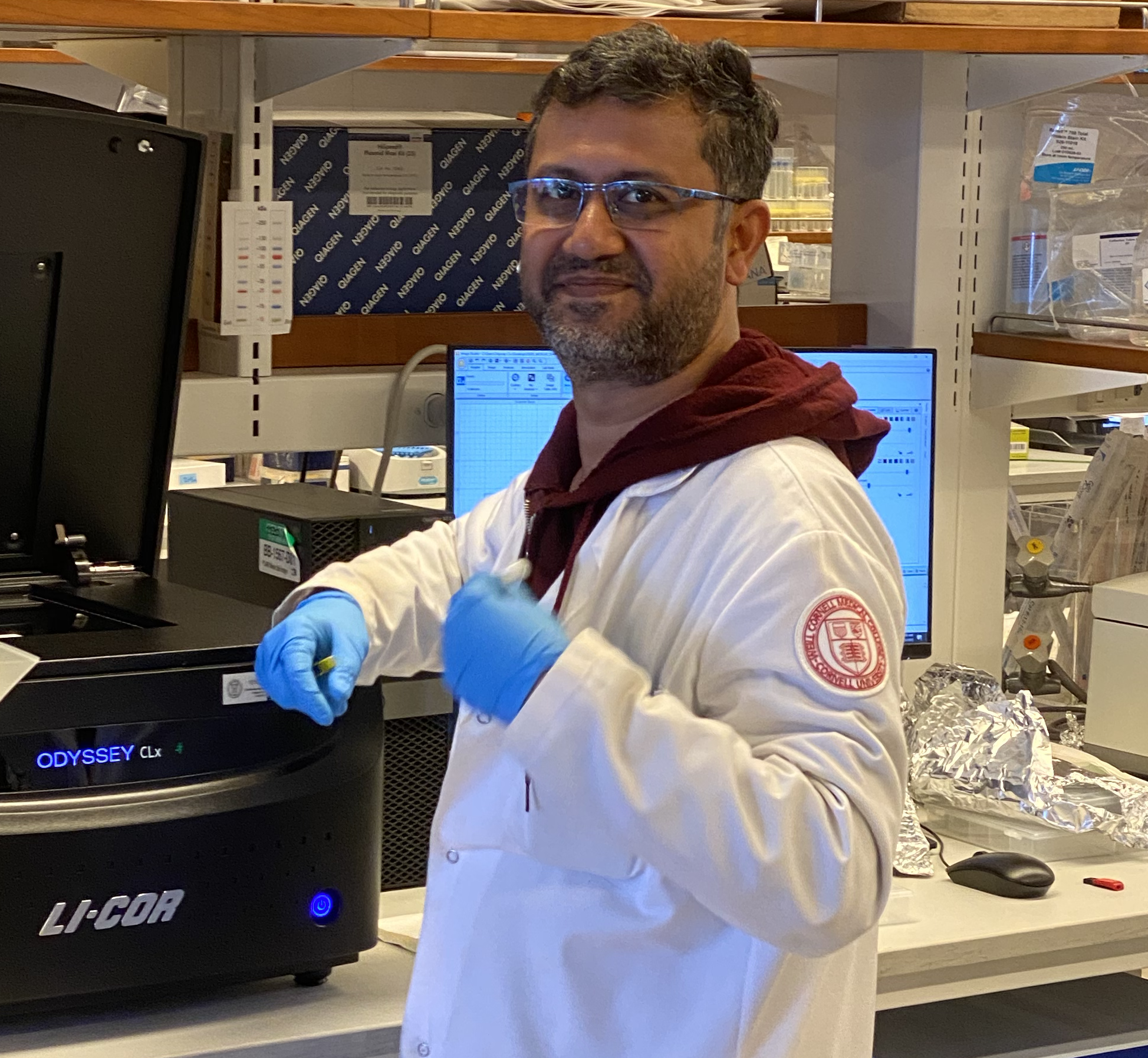
Cancer Epigenetics Lab
Research Focus:
Understanding how cancer cells adapt to survive
Our laboratory investigates the molecular mechanisms that enable cancer cells to change their identity, reprogram their chromatin landscape, and evade therapy. We focus on prostate cancer (PCa), with particular interest in lineage plasticity, neuroendocrine transdifferentiation, and therapeutic resistance. We study how transcription factors and various chromatin-remodeling complexes cooperate to reshape cancer cell states. By integrating molecular biology, biochemistry, genomics, epigenomics, proteomics, and bioinformatics we aim to uncover cancer-specific vulnerabilities and develop new strategies to overcome therapy resistance.
Our central question: How does cancer cells reprogram itself to survive therapy and can we exploit this reprograming to defeat it?
Research Themes:
- Epigenetic Reprogramming and Therapy Resistance
Our lab studies how cancer cells alter chromatin architecture and control gene expression when encountered with targeted therapy pressure. We are particularly interested in ATP-dependent chromatin remodeling complexes (CRCs) and their interaction with various transcription factors that enable PCa cells to develop therapy resistance.
- Lineage Plasticity and Neuroendocrine Prostate Cancer (NEPC)
Androgen receptor pathway inhibition (ARPi) drives prostate cancer cells toward alternate cellular states that involves a transition from luminal to basal phenotype including acquisition of neuroendocrine phenotypes. We aim to decipher the molecular mechanisms underlying this luminal-to-basal/neuroendocrine transition and identify vulnerabilities associated with this plastic state.
- Epigenetic Dependencies And Therapeutic Vulnerabilities
A central goal of our research is to translate mechanistic findings into therapeutic opportunities. We aim to identify dependencies created by cancer specific epigenetic reprograming and uncover strategies to target therapy resistant PCa cells.
Credentials:
- 2026: ANRF-Ramanujan Fellow, SMC-SCBRM, Adamas University, Kolkata
- 2020-2025: Postdoctoral Associate, Weill Cornell Medicine, Manhattan, NY, USA
- 2013-2020: Ph.D. in Life Sciences, CSIR-Indian Institute of Chemical Biology, Jadavpur University
- 2012-2013: Post M.Sc. research, Ballygunge Science College, C.U
- 2009-2011: M.Sc. in Zoology, Banaras Hindu University
Awards:
- 2026: Ramanujan Fellowship, ANRF, GoI
- 2018: Experimental Hematology travel award, UCLA, California, USA
- 2015-2018: CSIR-UGC NET SRF, CSIR-IICB, Kolkata
- 2012-2015: CSIR-UGC NET JRF, AIR:21, CSIR-IICB, Kolkata
- 2011: GATE in Life Sciences, AIR:107
Publications:
- Chatterjee SS, Linares JF, Cid-Diaz T, Duran A, Khan MIK, Osrodek M, Brady NJ, Reina-Campos M, Marzio A, Venkadakrishnan VB, Bakht MK, Khani F, Mosquera JM, Robinson BD, Moyer J, Elemento O, Hseieh AC, Goodrich DW, Rickman DS, Beltran H, Moscat J, Diaz-Meco MT. Increased translation driven by non-canonical EZH2 creates a synthetic vulnerability in enzalutamide-resistant prostate cancer. Nat Commun 15, 9755 (2024).
- Boila LD, Ghosh S, Bandyopadhyay SK, Jin L, Murison A, Zeng AG, Shaikh W, Bhowmik S, Muddineni SSNA, Biswas M, Sinha S, Chatterjee SS, et al. KDM6 demethylases integrate DNA repair gene regulation and loss of KDM6A sensitizes human acute myeloid leukemia to PARP and BCL2 inhibition. Leukemia 37, 751-764 (2023).
- Sinha S, Biswas M1, Chatterjee SS1, Kumar S, Sengupta A. Pbrm1 Steers Mesenchymal Stromal Cell Osteolineage Differentiation by Integrating PBAF-Dependent Chromatin Remodeling and BMP/TGF-β Signaling. Cell Reports; 31(4), 1-17 (2020). 1equal contribution.
- Biswas M1, Chatterjee SS1, Boila LD, Chakraborty S, Banerjee D, Sengupta A. MBD3/NuRD loss participates with KDM6A program to promote DOCK5/8 expression and Rac GTPase activation in human acute myeloid leukemia. Faseb J 33(4), 5268-5286 (2019). 1co-first author.
- Chatterjee SS1, Biswas M1, Boila LD, Banerjee D, Sengupta A. SMARCB1 Deficiency Integrates Epigenetic Signals to Oncogenic Gene Expression Program Maintenance in Human Acute Myeloid Leukemia. Mol Cancer Res 16(5), 791-804 (2018). 1co-first author.
- Sinha S, Chatterjee SS, Biswas M, Nag A, Banerjee D, De R, Sengupta A. SWI/SNF Subunit Expression Heterogeneity in Human Aplastic Anemia Stem/Progenitors. ExpHematol 69, 39-44 (2018).
- Boila LD, Chatterjee SS, Banerjee D, Sengupta A. KDM6 and KDM4 Histone Lysine Demethylases Emerge as Molecular Therapeutic Targets in Human Acute Myeloid Leukemia. ExpHematol 58, 44-51 (2018).
Book Chapter:
- Sayantani Sinha, Liberalis D Boila, Shankha S Chatterjee and Amitava Sengupta. miRNA and Cancer: A deadly Liaison? Of Cancer and Noncoding RNAs. Academic Press; Elsevier (2018).
JOIN US!!
We invite motivated people who are passionate about doing cancer biology research to join our new team! ICMR-JRF and DBT-JRF awardees with specialization in biochemistry, biotechnology, genetics, bioinformatics, cell/molecular biology are encouraged to contact with complete CV/biodata by e-mail to shankhasubhra.chatterjee1@ext.adamasuniversity.ac.in.